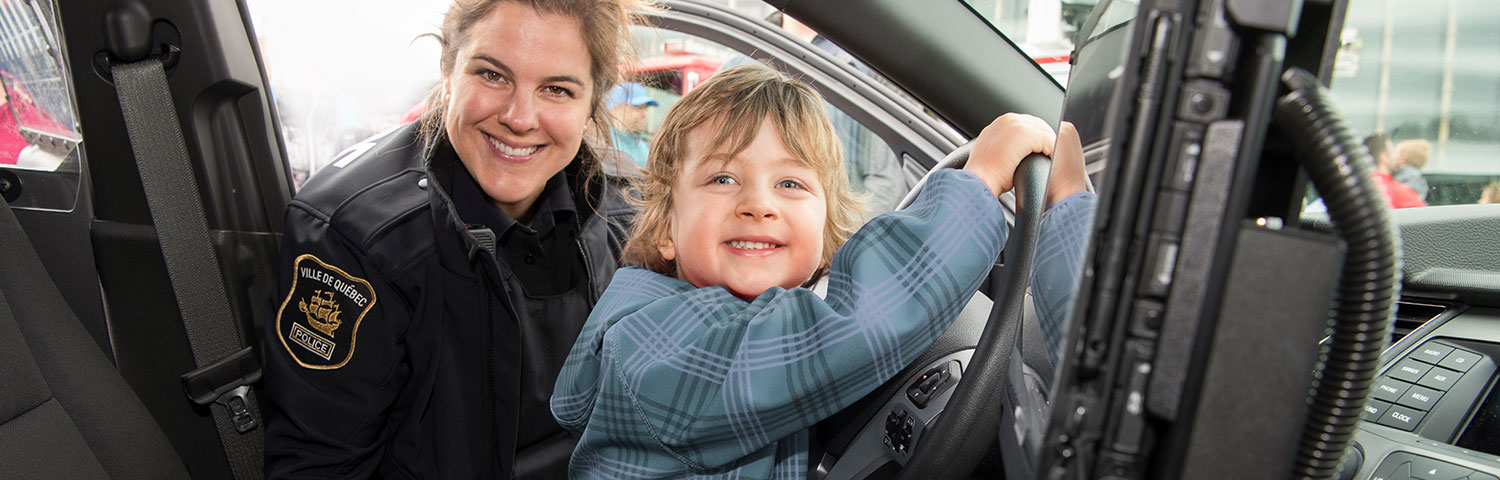
Hi, I am Pia Khazzaka. I am in my second year in Police Technology. I am making this glossary for my English class. Making this glossary will be useful to know more words, to know how to use them properly when we are talking about our program and to be able to write them correctly.
arrest
verb
Seize (someone) by legal authority and take into custody.
Example: The police still possess considerable discretion to ARREST and detain and are required to report to procurer only "as soon as possible".
fr: arrêter
authority
noun
The power or right to give orders, make decisions, and enforce obedience.
Example: They had absolute authority over the criminals.
fr: autorité
backup
noun
Help or support.
Example: We lost a criminal and we need backup to be able to find him in one particular area.
fr: renfort
complaint
noun
A complaint is any formal legal document that sets out the facts and legal reasons that the filing party or parties believes are sufficient to support a claim against the party or parties against whom the claim is brought that entitles the plaintiff to a remedy.
Example: I intend to make an official complaint on my neighbours.
fr: une plainte
court
noun
A tribunal presided over by a judge, judges, or a magistrate in civil and criminal cases.
Example: 1. She will take the matter to court this week.
2. The lowest COURTs the County COURT (civil law) and the Magistrates COURT (criminal law) are bound by the High COURT and the Crown COURT respectively.
fr: cour
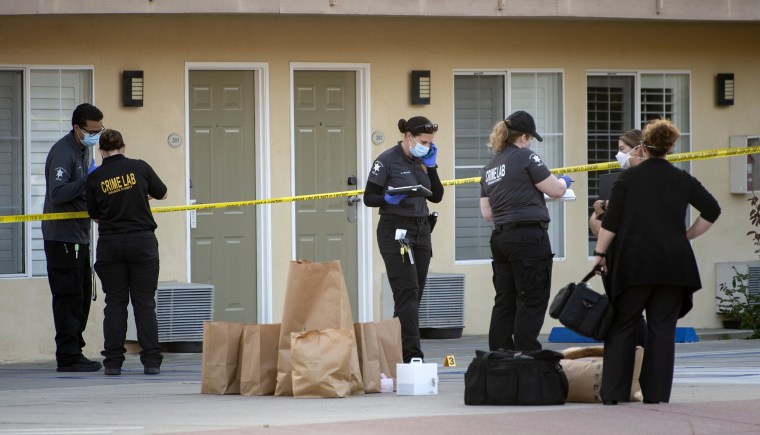
crime scene
noun
The place where an offense has been committed and forensic evidence may be gathered.
Example: Not only can a DNA fingerprint identify and place a suspect at a CRIME SCENE but it can also be evidence of a crime itself.
fr: scène de crime
criminal
noun
a person who has committed a crime.
Example: It's not easy task to find the CRIMINAL as from which part in the world that CRIMINAL is doing cyber terrorism.
fr: criminel
detention
noun
Detention is the process whereby a state or private citizen lawfully holds a person by removing their freedom or liberty at that time. This can be due to criminal charges preferred against the individual pursuant to a prosecution or to protect a person or property.
Example: PACE permits up to 24 hours' DETENTION without charge; this can be extended to 36 hours, where circumstances permit, by an officer of the rank of superintendent or above.
fr: Detention
interrogation
noun
Interrogation is interviewing as commonly employed by law enforcement officers, military personnel, intelligence agencies, organized crime syndicates, and terrorist organizations with the goal of eliciting useful information, particularly information related to suspected crime.
Example: The legislation has also been successful in encouraging more suspects to answer questions during INTERROGATION, although the increased information given to the police has not resulted in a rise in the percentage of suspects charged.
fr: interrogatoire
intervention
noun
The physical involvement of police officers in an incident, esp where officers use force to control public disorder, such as a riot.
Example: At yesterday's football match, fighting developed into a riot, provoking police intervention.
fr: intervention
investigate
verb
Carry out a systematic or formal inquiry to discover and examine the facts of (an incident, allegation, etc.) so as to establish the truth.
Example: The police are investigating the alleged beating.
fr: enquêter
law
noun
The system of rules which a particular country or community recognizes as regulating the actions of its members and which it may enforce by the imposition of penalties.
Example: They were taken to court for breaking the law.
fr: loi
law enforcement
noun
Law enforcement is the activity of some members of government who act in an organized manner to enforce the law by discovering, deterring, rehabilitating, or punishing people who violate the rules and norms governing that society. The term encompasses police, courts, and corrections.
Example: He's a police officer, he works in law enforcement.
fr: loi mise en vigueur
patrol
noun
An expedition to keep watch over an area, especially by guards or police walking or driving around at regular intervals.
Example: The sergeant ordered us to investigate on a night patrol.
fr: patrouille
police department
noun
A governmental department concerned with the administration of the police force an increased budget for the police department.
Example: Call out the entire police department.
fr: service de police
prevent
verb
Keep (something) from happening or arising.
Example: Action must be taken to prevent further accidents and crimes.
fr: empêcher
safety
noun
The condition of being protected from or unlikely to cause danger, risk, or injury.
Example: Police typically are responsible for maintaining public order and safety.
fr: sécurité
suspect
noun
A person thought to be guilty of a crime or offense.
Example: The police have arrested a suspect of assault.
fr: suspect
testifying
verb
Give evidence as a witness in a law court.
Example: A police officer and his partner had to go testify in court on a situation that happened a month ago while they were patrolling.
fr: témoigner
warrant
Noun
A document issued by a legal or government official authorizing the police or some other body to make an arrest, search premises, or carry out some other action relating to the administration of justice.
Example: The magistrates issued a warrant for his arrest.
fr: mandat
witness
noun
A person who sees an event, typically a crime or accident, take place.
Example: The Criminal Justice Act 2003 makes provisions for the protection of all WITNESSES, not just the most vulnerable, through the option to give evidence via TV link.